
The best Tanzania honeymoon itinerary is around two weeks, combining a mainland safari with a slower finish on Zanzibar’s beaches. A balanced plan can include several days exploring wildlife-rich parks and several more beside the Indian Ocean, with time built in for travel between destinations.
It’s easy to see why couples want both: dawn game drives bring the thrill of the wild, while warm sea air and unhurried beach days make space to celebrate together. Shape the journey around the season, the wildlife experiences you most want, and the kind of coast where you’d love to unwind.
This guide covers how to choose when to travel, divide your days between safari and beach, and select stops such as Tarangire, Serengeti, and Ngorongoro. You’ll also learn how a Tanzania and Zanzibar honeymoon itinerary can flow from the mainland to the coast, turning a collection of dream destinations into one memorable journey.
The best Tanzania honeymoon itinerary usually takes 10 to 14 days, balancing wildlife encounters with restorative time beside the Indian Ocean. For many couples, 4 to 5 safari days and 5 to 7 beach days create a satisfying rhythm. A 10-day trip can instead divide its nights between safari and Zanzibar, allowing both experiences without making either the entire honeymoon.
For a 7-day version, focus on one compact safari area and a shorter Zanzibar stay; a 10-day plan allows roughly 4 to 5 nights in each setting. With 12 to 14 days, consider extending the safari to 5 or 6 mainland days before settling into longer beach days. The right split depends on whether wildlife viewing or slow coastal mornings matter most to you.
A northern circuit can bring Tarangire, Serengeti, and Ngorongoro into one mainland journey, followed by Zanzibar. Allow at least five or six mainland days when visiting several national parks, rather than squeezing long drives and game drives into too few nights. A focused alternative is to choose one park, such as the Serengeti National Park, then fly or travel onward to the coast.
On a 10-day northern itinerary, arrive near Arusha, continue to Tarangire, then spend more time around the Serengeti and Ngorongoro before transferring to Zanzibar. The precise sequence depends on travel connections and the parks selected. A southern Tanzania circuit offers a different mainland experience; its safari season runs from early July until the end of October. Choose north or south based on the landscapes and wildlife areas you want to prioritize.
For wildlife safety, follow your guide’s instructions, stay inside the vehicle during game viewing unless your guide says otherwise, and keep a respectful distance from animals. Before departure, discuss travel health preparations, including relevant medicines and vaccinations, with a qualified travel health professional.
Pack layers for cool safari mornings and warm afternoons, comfortable walking shoes, sun protection, and insect repellent. Add swimwear, a light beach cover-up, and a waterproof pouch for Zanzibar. Keep essentials within easy reach during transfers.
Safari logistics shape the pace: road transfers, internal flights, park choices, and the handoff to Zanzibar all affect how much time remains for game drives or beach rest. A specialist tour operator can coordinate those moving parts around your chosen 7- to 14-day duration.
June to October and December to February are dry-season periods for safari and beach travel in Tanzania. July through September is often considered the strongest weather window, with dry conditions and wildlife more visible. For couples drawn to both game viewing and the Indian Ocean, these months can make it easier to pair unhurried island days with time in a reserve. Expect warm conditions throughout the year, with temperatures of 25 degrees C or higher.
Migration timing can help narrow your travel dates. The Northern Serengeti’s peak viewing period usually falls from mid-July to late September, when wildebeest move through the region. Around 1.5 million wildebeest travel across Tanzania in search of green pastures following the rains. The movement shifts across the ecosystem, so the right safari area depends on the season and the wildlife experience you want. Mobile tented camps move two to three times per year to stay positioned for the Great Migration. See how the Serengeti National Park fits into a migration-focused journey.
January and February bring another compelling seasonal moment: calving in the southern Serengeti and Ndutu. This period suits couples who want to experience the migration cycle beyond the Northern Serengeti crossings. Southern Tanzania has a different window, with its safari season running from early July to the end of October. Choose your region around the wildlife experience you want, rather than expecting every park to offer the same seasonal highlights.
April and May call for more careful planning. These rainy months are often avoided for a safari-and-Zanzibar honeymoon because many lodges close during the rains. If those are your only available dates, choose destinations and lodges with seasonal conditions in mind, and keep the itinerary flexible. June and October offer shoulder-season alternatives to the busiest dry-season period.
For peak travel from July through October, experienced operators recommend booking 6 to 12 months ahead. Start by choosing your priority: Northern Serengeti migration viewing, southern calving season, or dry-season conditions across safari and coast. Then fit Zanzibar around that choice, allowing transfers to connect the mainland and island without crowding out game drives. A beautiful honeymoon begins with a season that matches what you most want to see.
Zanzibar offers a gentle contrast to safari days: ocean air, sandy beaches, and time to enjoy the island at your own pace. The Zanzibar Archipelago has over 50 islands and islets, so couples can choose a lively coastal base or a quieter island escape. For a first visit, decide whether you want easy access to activities, relaxed resort time, or both.
Nungwi suits a honeymoon plan that places beach days together at the journey’s end. One itinerary allows four days in Nungwi from days 8 through 11, creating space for swimming, sunset walks, and unhurried meals. Zanzibar’s coastline experiences changing tides, so plan beach walks and swims around local conditions rather than assuming the waterline stays constant all day.
Choose romantic lodges and beach resorts for the atmosphere you want, rather than relying on a universal ranking. Consider the privacy, setting, and pace that matter to you, whether that means a beachside room in Nungwi or a more secluded island retreat. If you’re spending more than four nights on the coast, consider dividing your stay between two resorts.
That split could mean three nights on Zanzibar and three on Pemba or Fanjove Island. It adds a change of scenery without turning every day into a transfer, creating a distinct second chapter after safari. Keep the mainland route in mind, too: time around Ngorongoro Crater or a national park may influence which Zanzibar arrival point makes the smoothest transition.
For activities, combine a Stone Town visit with a boat excursion or snorkeling around Mnemba Island. Stone Town and Prison Island offer a culture-and-coast pairing, while snorkeling adds time on the water. Choose activities sparingly if your priority is rest; one planned outing can leave the next day open for the beach. This Zanzibar holiday guide can help frame the island portion of your plans.
Before settling on a destination, map each transfer against the beach time you’ll have left. A remote island can feel wonderfully secluded, but reaching it takes coordination; Nungwi may work better for a straightforward beach finale. Match the coast to your safari’s rhythm, then leave room for tide-aware swims, slow mornings, and a final sunset over the Indian Ocean.
A 12-day route can move from northern Tanzania’s wildlife to Zanzibar’s beaches. Allow for a couple of nights occupied by overnight flights, which may sit outside the days spent on the ground. Keep the mainland sequence compact, then give the island several days for a slower ending.
Use this day-by-day outline as a starting point:
This sequence reaches Tarangire, Lake Manyara, the Serengeti, and Ngorongoro Crater without adding another mainland region. A flight on Day 7 helps bridge safari and coast; allow enough time for the transfer to the departure airport and your onward connection. International flights are separate from the Tanzania-and-Zanzibar package described in the itinerary facts, so plan those legs independently.
Couples adding South Africa can place Zanzibar after a Cape Town or Stellenbosch stay. One example itinerary included four nights in Zanzibar and a direct Johannesburg-to-Zanzibar flight. Plan the safari portion separately, since adding another country changes the route and the time available.
For U.S. travelers, Tanzania Immigration Department lists the ordinary tourist visa fee at US$50 currently and the multiple-entry visa fee at US$100. The visa category depends on the trip’s entry plans. Keep a passport valid for at least six months after your scheduled return date and at least two blank pages for stamps. Discuss vaccinations with a travel-health professional based on your health and route; choose travel insurance that suits safari, flight, and beach activities.
Road transfers connect parks on the mainland, while an internal flight can link the safari region with Zanzibar. Schedule the island flight around your final game drive and onward departure, leaving enough time for the airport transfer.
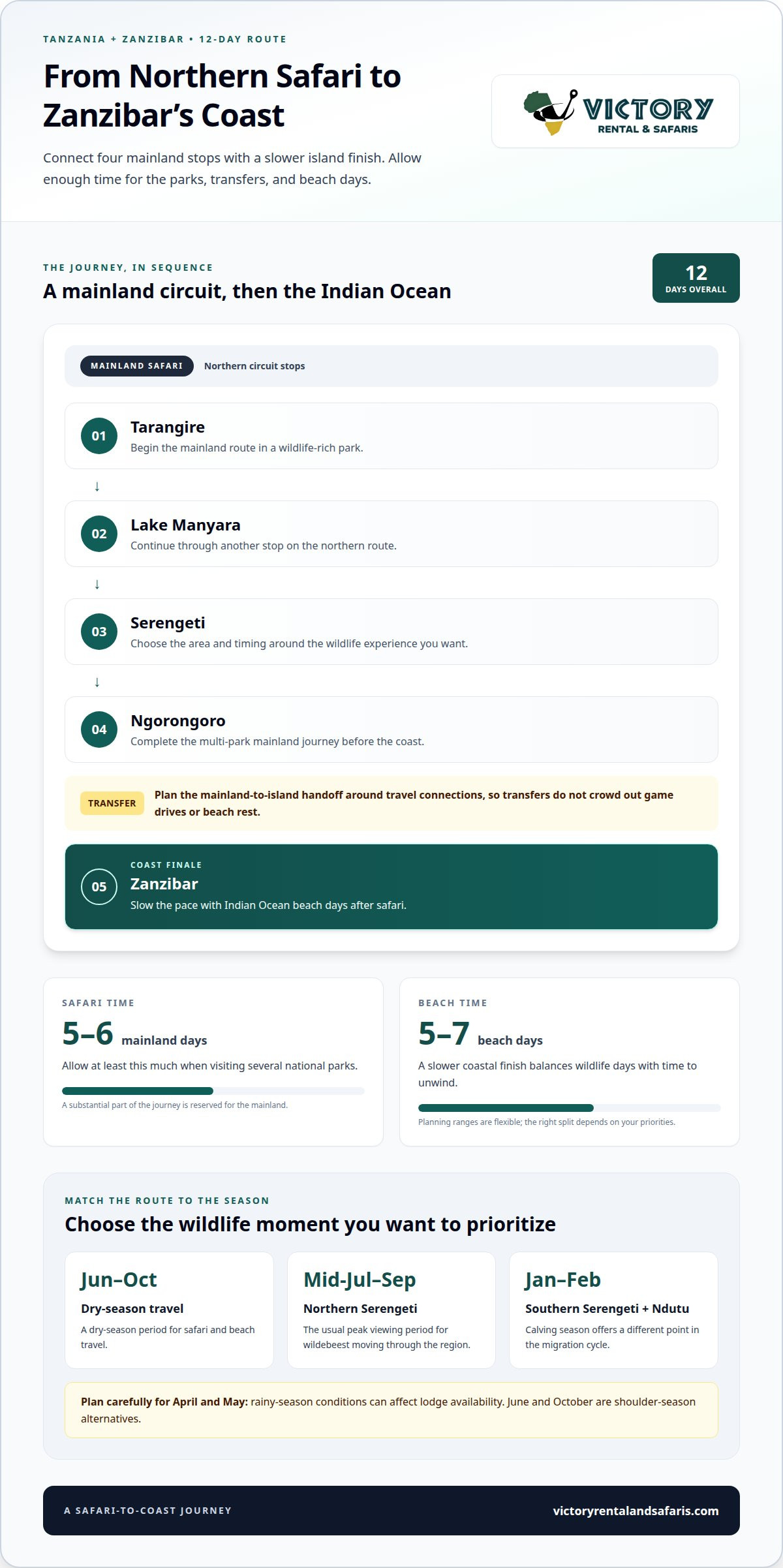
Allow enough time for wildlife viewing and transfers on the northern circuit, rather than treating every park as a quick stop. A multi-park mainland safari should allow at least five or six days. Tarangire, Serengeti, and Ngorongoro each offer a distinct landscape, so choose the sequence around your priorities and travel dates. The route also affects drive times and how much energy remains for game drives and evenings together.
One practical route starts in Arusha, continues to Tarangire, then travels through the Serengeti before reaching Ngorongoro. The drive from Arusha to Tarangire takes approximately 3 hours, excluding game drives. From Ngorongoro Crater to the Serengeti, the drive takes 3-4 hours, excluding game drives. Include those journeys in your day-by-day plan, since transfer time reduces time available for wildlife viewing.
In the Serengeti, choose where to stay based on the season and wildlife experience you’re seeking. The Great Migration moves across the ecosystem, so location affects what you may see on game drives. Ngorongoro offers a different setting, with crater scenery and wildlife viewing in a volcanic landscape. Allow time for the descent and viewing on the crater floor, not just the surrounding viewpoints.
Ngorongoro Conservation Area Authority lists the Ngorongoro Crater service fee at approximately $295 to $300 per vehicle per descent. Keep park fees in mind while shaping the route, and use the authority’s tariff information for the full table and applicable travel dates.
Tarangire can open the trip with a focused first safari before the longer Serengeti leg. Couples hoping to see the migration may devote more nights to the Serengeti; those drawn to crater landscapes can shape the route around Ngorongoro. These choices affect drive times, accommodation, and how much room remains for relaxed evenings before traveling to Zanzibar.
For Serengeti, Ngorongoro, and Zanzibar, allow at least five or six mainland days across multiple parks, then reserve five to seven beach days if your overall trip allows. The right balance depends on travel time and the parks you include. Avoid combining a long transfer with a full game-drive schedule in one day, so each experience has room to unfold.
As you map the route, use a Tanzania safari itinerary guide to organize the stops around your priorities and leave each destination room to breathe.
Victory Rental & Safaris helps couples shape a Tanzania honeymoon around safari priorities and time on Zanzibar. Start by choosing the experience that should anchor the mainland portion: migration viewing, a northern route through Serengeti and Ngorongoro, or a safari that begins from the island. From there, the journey can be planned around the season, your preferred pace, and the transition between wildlife and beach days.
For couples drawn to the moving herds, the Serengeti Great Migration and Great Migration Tanzania Tour offer focused safari options. If your plans connect Kenya’s Masai Mara with Tanzania’s wildlife landscapes, the Masai Mara to Serengeti & Ngorongoro Safari Adventure follows that cross-border route. These options help shape the mainland portion around the wildlife experience you most want, rather than adding parks simply to make the itinerary longer.
A Zanzibar-first or island-based plan can take a different shape. The Mikumi Safari from Zanzibar lets you add a mainland wildlife experience while keeping Zanzibar central to your holiday. Decide whether the beach should be the restful finale or your base for a safari excursion, then organize the rest of the itinerary around that choice. Each route suits a different travel rhythm, so the best fit depends on your dates and priorities.
Before settling on a plan, bring together your preferred travel season, the safari landscapes you hope to see, and how much time you want beside the Indian Ocean. Consider how much of the trip you want to spend on mainland drives, wildlife viewing, and beach activities. These choices give the itinerary a clear shape and make each transition purposeful. If migration viewing is central, make it the guiding priority; if relaxed coastal time matters most, protect those Zanzibar days.
Victory Rental & Safaris can help turn those choices into a cohesive Tanzania safari and Zanzibar journey, using the safari experiences that match your plans. The aim is a considered route, not a crowded checklist of destinations. Share your preferred season, safari interests, and beach plans to begin shaping the trip. Contact Victory Rental & Safaris to discuss your honeymoon itinerary.
The best Tanzania honeymoon itinerary is more than a route between remarkable places. It reflects what you want to remember together: the hush before a game drive, a favorite stretch of coastline, or an unhurried morning with no plans. Let those shared priorities guide your choices, and leave room for spontaneous moments as well as the experiences you’ve been dreaming about.
As you shape the details, think about the feeling you want to carry home. Perhaps it’s the wide-open quiet of the savannah, the colors and character of Zanzibar, or the contrast between the two. Victory Rental & Safaris can help turn those preferences into a carefully planned Tanzania journey.
Begin planning your honeymoon journey, and look forward to a celebration shaped around the two of you.
June to October and December to February are dry-season periods for safari and beach travel. Choose dates around the experience you most want: Northern Serengeti migration viewing usually peaks from mid-July to late September, while calving takes place in southern Serengeti and Ndutu in January and February. April and May are rainy months, and many lodges close. If your dates are fixed then, plan around destinations and stays suited to seasonal conditions.
Choose northern Tanzania for a route linking Serengeti, Ngorongoro, and Tarangire, or consider southern Tanzania if its parks better match your priorities. The Northern Serengeti suits travelers focused on the migration’s mid-year movement; Ndutu is a January-February choice for calving season. Factor in drive times as well as wildlife interests: visiting several parks takes mainland days away from the beach. A focused safari area can leave more breathing room for transfers and Zanzibar.
Place Zanzibar after the mainland safari if you want the journey to end at a slower pace. Build the transfer into your schedule rather than treating the flight as a full beach day, and avoid planning a tightly timed international departure after a long park transfer. On the island, choose a base that suits your preferred activities, then leave open time for swimming, meals, and rest between excursions.
Serengeti is a strong choice for expansive wildlife viewing and migration-focused travel; Ngorongoro offers crater scenery and a concentrated game-viewing experience. Tarangire brings a distinct landscape and is known for elephant groups that can number up to 250 during the dry season. The best combination depends on your interests and available mainland time. Prioritize the parks that fit your season rather than trying to include every famous stop.
For Northern Serengeti migration viewing, plan around the usual peak from mid-July to late September. January and February are better aligned with calving in southern Serengeti and Ndutu. The migration moves across Tanzania, so select a safari area that matches the time of year instead of expecting the same wildlife viewing in every region. Dry-season travel windows also suit a safari-and-Zanzibar combination, while April and May bring heavier rain.
These include safari days, park fees, a domestic Arusha-to-Zanzibar flight, and a 3-5-night half-board beach stay. See the TANAPA tariff information and Ngorongoro Conservation Area Authority tariff information for full tables.
{
“@context”: “https://schema.org”,
“@type”: “FAQPage”,
“mainEntity”: [
{
“@type”: “Question”,
“name”: “So, what’s the ideal Tanzania and Zanzibar honeymoon itinerary?”,
“acceptedAnswer”: {
“@type”: “Answer”,
“text”: “A balanced honeymoon gives you time to enjoy both wildlife and the coast without rushing between stops. For a 10-day trip, decide which experience deserves more unhurried time, then choose parks and transfers to fit that priority. The best Tanzania honeymoon itinerary is shaped around your travel season and shared interests. Keep international flight days in mind when setting your ground itinerary, since overnight journeys can use valuable holiday time.”
}
},
{
“@type”: “Question”,
“name”: “When is the best time to visit Tanzania?”,
“acceptedAnswer”: {
“@type”: “Answer”,
“text”: “June to October and December to February are dry-season periods for safari and beach travel. Choose dates by the experience you most want: Northern Serengeti migration viewing usually peaks from mid-July to late September, while calving takes place in southern Serengeti and Ndutu in January and February. April and May are rainy months, and many lodges close. If your dates are fixed then, build your plan around destinations and stays suited to seasonal conditions.”
}
},
{
“@type”: “Question”,
“name”: “Which Safari Area Should You Choose?”,
“acceptedAnswer”: {
“@type”: “Answer”,
“text”: “Choose northern Tanzania for a route linking Serengeti, Ngorongoro, and Tarangire, or consider southern Tanzania if its parks better match your priorities. The Northern Serengeti suits travelers focused on the migration’s mid-year movement; Ndutu is a January-February choice for calving season. Consider drive time as well as wildlife interests: adding several parks takes mainland days away from the beach. A focused safari area can leave more breathing room for transfers and Zanzibar.”
}
},
{
“@type”: “Question”,
“name”: “How should couples combine a Tanzania safari with Zanzibar beach time?”,
“acceptedAnswer”: {
“@type”: “Answer”,
“text”: “Place Zanzibar after the mainland safari if you want the journey to finish at a slower pace. Build the transfer into your schedule instead of treating the flight as a full beach day, and avoid planning a tightly timed international departure after a long park transfer. On the island, pick a base that suits your preferred activities, then leave open time for swimming, meals, and rest between excursions.”
}
},
{
“@type”: “Question”,
“name”: “Which Tanzania safari parks are best for a honeymoon, and how do they compare?”,
“acceptedAnswer”: {
“@type”: “Answer”,
“text”: “Serengeti is a strong choice for expansive wildlife viewing and migration-focused travel; Ngorongoro offers crater scenery and a concentrated game-viewing experience. Tarangire brings a distinct landscape and is known for elephant groups that can number up to 250 during the dry season. The best combination depends on your interests and available mainland time. Prioritize the parks that fit your season rather than trying to include every famous stop.”
}
},
{
“@type”: “Question”,
“name”: “What is the best time of year for a Tanzania honeymoon and the Great Migration?”,
“acceptedAnswer”: {
“@type”: “Answer”,
“text”: “For Northern Serengeti migration viewing, plan around the usual peak from mid-July to late September. January and February are better aligned with calving in southern Serengeti and Ndutu. The migration moves across Tanzania, so select a safari area that matches the time of year, rather than expecting the same wildlife viewing in every region. Dry-season travel windows also suit combining safari with Zanzibar, while April and May bring heavier rain.”
}
},
{
“@type”: “Question”,
“name”: “What does a Tanzania honeymoon cost, including safari, lodging, flights, and park fees?”,
“acceptedAnswer”: {
“@type”: “Answer”,
“text”: ” These include safari days, park fees, a domestic Arusha-to-Zanzibar flight, and a 3-5-night half-board beach stay. See the TANAPA tariff information at https://www.tanzaniaparks.go.tz/ and Ngorongoro Conservation Area Authority tariff information at https://www.ncaa.go.tz/ for full tables. ”
}
}
]
}
Choose a stay for the privacy, setting, and pace you want, whether that’s a beachside room in Nungwi or a more secluded island retreat. If you spend more than four nights on the coast, consider splitting your stay between two resorts.