
The right Tanzania safari is not necessarily the one with the most famous park. It is the one that fits the wildlife experiences and landscapes you want to see. You might plan around the Great Migration in the Serengeti, explore the distinct setting of Ngorongoro Crater, or add Tarangire, Lake Eyasi, or Mikumi for a change of scenery.
It can be hard to know where to begin. Park names can blur together, and balancing wildlife interests with your available time and preferred travel style takes planning. A rewarding trip starts with a few clear choices: what matters most, how much time you have, and whether you want a guided journey or a more self-directed trip.
This guide compares Tanzania’s safari destinations and travel formats, then walks through practical decisions for building a route. Guided safaris can connect several wildlife areas in one planned journey, while a private safari vehicle rental offers a different level of independence. Start with the experience you care about most, then choose the destinations and pace to suit it.
A Tanzania safari takes you through living landscapes, from open grasslands to wooded terrain and wetlands, where wildlife moves on its own terms. The experience is more than a drive to see animals. The habitats, the pace of travel, and the transitions between protected areas all shape what you notice and how the journey feels.
A Tanzania safari is guided wildlife travel through natural habitats, shaped by the landscapes you cross and the animals’ changing movements, rather than a visit to one park alone.
That distinction matters when you plan. A visit to one park can offer a rich experience, while a safari route can connect different environments and viewing opportunities. Tanzania’s national parks are managed and conserved through the Tanzania National Parks Authority (TANAPA). Wildlife viewing takes place in a natural ecosystem, not on a schedule. Animals move, conditions change, and no particular sighting can be promised.
You might see elephants moving through trees, lions resting in the shade, giraffes browsing, or zebras crossing open ground. These are possibilities, not a checklist. Sightings depend on the habitat, season, and wildlife movement. Game drives with a guide are a common way to observe animals in their natural surroundings. Look beyond the animals, too: tracks, calls, and changes in vegetation can help you read the landscape, even when wildlife is not immediately visible.
A guided safari typically balances wildlife-viewing drives with travel between viewing areas. The pace can vary. A quiet stretch of road may call for patience, while an animal’s presence may invite a longer pause. A guide can help interpret animal behavior and the surrounding landscape, adding context to what you see. Keep expectations flexible: wildlife does not follow a timetable, and the quieter moments are part of being out in the wild.
In practice, allow time to travel between habitats and approach each drive with curiosity rather than a fixed list of sightings. One day may bring close observation; another may be memorable for the scale of the landscape or signs of animals passing through. The experience comes from the whole journey: moving through natural places, watching carefully, and letting the wild set the pace.
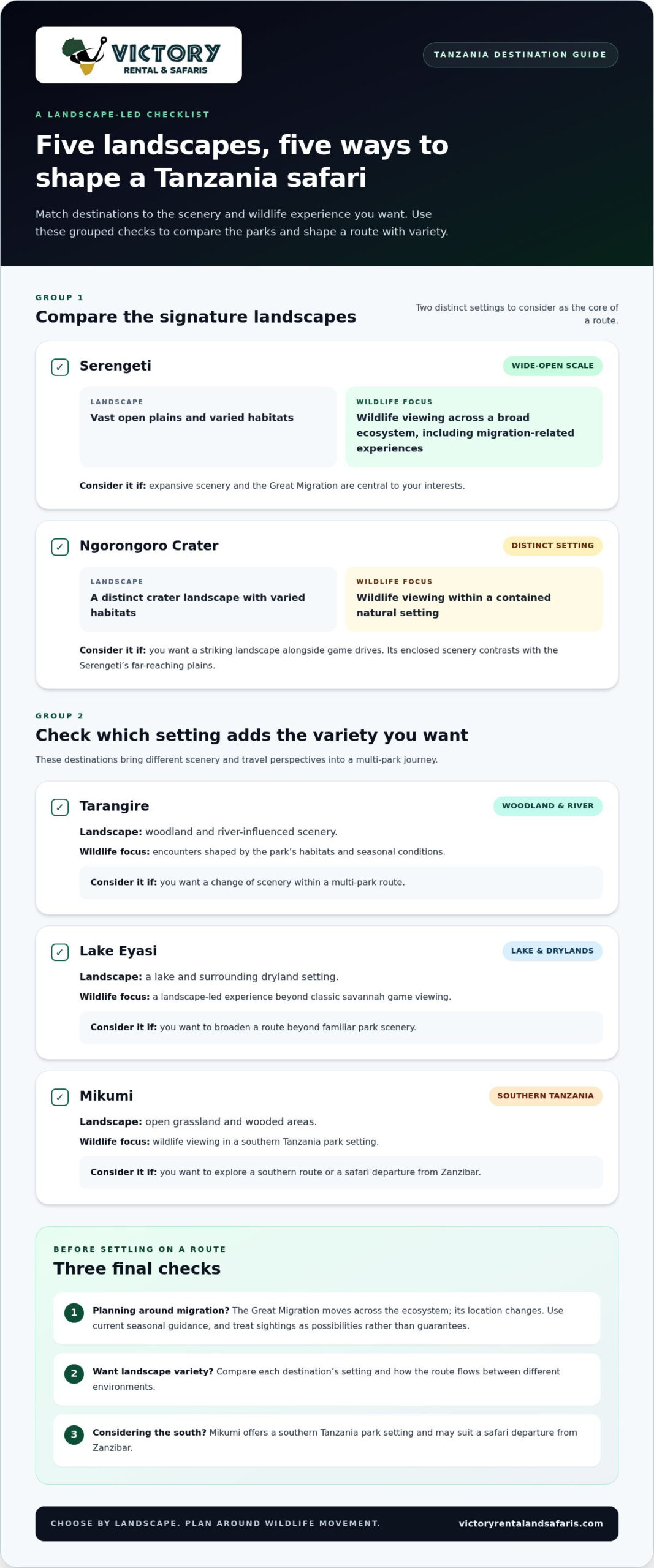
Choosing parks is less about finding one “best” destination and more about deciding which landscapes and wildlife experiences you want to combine. A Tanzania safari might pair the wide horizons of the Serengeti with Ngorongoro Crater’s distinct setting, or add Tarangire, Lake Eyasi, or Mikumi for a different perspective. Each destination can change the character and pace of the trip.
| Destination | Landscape character | Wildlife focus | May suit travelers who |
|---|---|---|---|
| Serengeti | Vast open plains and varied habitats | Wildlife viewing across a broad ecosystem, including migration-related experiences | Want expansive scenery and are interested in the Great Migration |
| Ngorongoro Crater | A distinct crater landscape with varied habitats | Wildlife viewing within a contained natural setting | Want to experience a striking landscape alongside game drives |
| Tarangire | Woodland and river-influenced scenery | Wildlife encounters shaped by the park’s habitats and seasonal conditions | Want a change of scenery within a multi-park route |
| Lake Eyasi | A lake and surrounding dryland setting | A different landscape-led experience from classic savannah game viewing | Want to broaden a route beyond familiar park scenery |
| Mikumi | Open grassland and wooded areas | Wildlife viewing in a southern Tanzania park setting | Want to consider a southern route or a safari departure from Zanzibar |
The Serengeti’s far-reaching plains create a strong sense of scale, with wildlife viewing shaped by the movement of animals across the ecosystem. The Great Migration is a large-scale wildlife movement, not a scheduled gathering at one guaranteed viewing point. Its location changes as animals move, so use current seasonal guidance when planning. For more detail on migration-focused planning, explore this Serengeti Great Migration safari guide.
Ngorongoro offers a contrasting experience: a distinct protected landscape where grassland, woodland, and wetland habitats sit within the crater setting. Rather than treating it as an extension of the Serengeti, consider how its enclosed scenery and varied environments could add contrast to a route. Sightings still depend on wildlife movement and conditions.
Tarangire brings woodland and river scenery into the mix. Lake Eyasi shifts attention to a lake and surrounding drylands, while Mikumi offers open grassland and wooded terrain in a southern park setting. These destinations can complement a broader journey by adding landscape variety and changing the travel rhythm. A Mikumi safari from Zanzibar may also suit travelers considering a safari departure from Zanzibar.
Let your priorities guide the combination. If migration is central, plan around seasonal movement rather than a promised sighting. If variety matters more, compare landscapes and how the route flows between destinations. Victory Rental & Safaris’ guided safari journeys across Tanzania’s parks connect different settings in planned wildlife trips.
Tanzania’s parks answer to two authorities with different tariffs — TANAPA (national parks) and the NCAA (Ngorongoro). The official 2026 entry fees below are the same for every visitor and every operator, so use them as the anchor when comparing quotes:
| Park | Famous for | 2026 entry (adult, per 24h, incl. VAT) | Best time | Typical visit |
|---|---|---|---|---|
| Serengeti | The Great Migration, Africa’s most famous big-cat country | $82.60 ($70.80 in low season, 15 Mar–15 May) | Jun–Oct for crossings; Jan–Feb for calving | 3–4+ days |
| Ngorongoro Crater | The Big Five in one day — including black rhino | $70.80 + $295 crater descent per vehicle (not per person) | Year-round; drier months for easier viewing | 1–2 days |
| Tarangire | Huge elephant herds and ancient baobabs | ~$59 | Jun–Oct (dry season concentrations) | 1 day |
| Lake Manyara | Tree-climbing lions, flamingos, forest and lake in one park | ~$59 | Year-round | 1 day |
| Arusha National Park | Closest park to Arusha; Mt. Meru views, walking safaris | ~$47.20 | Year-round | 1 day (great arrival-day option) |
| Ruaha (south) | Wild dogs, big lion prides, true wilderness — few visitors | ~$35.40 | Jun–Nov | 2–3 days |
| Nyerere (Selous) (south) | Boat safaris on the Rufiji River, wild dogs | Confirm current rates | Jun–Oct | 2–3 days |
| Mikumi | Most accessible park from Zanzibar/Dar es Salaam | Confirm current rates | Jun–Oct | 1–2 days |
Three practical notes from the table. First, Ngorongoro’s $295 descent fee is per vehicle — a full car of six pays ~$49 each, a couple pays ~$148 each. Second, the southern parks (Ruaha, Nyerere) charge roughly half the Serengeti’s fees for a far wilder experience. Third, fees are reviewed annually — confirm at the gate or with your operator before paying a deposit.
Park fees are only part of the budget — here’s the honest picture by comfort level, per person per day for a complete guided safari (park fees, vehicle, guide, meals, accommodation):
Wherever you sit on that scale, park and conservation fees typically account for 25–35% of the total — they’re the reason a $150-per-day “Serengeti safari” cannot be what it claims. Before paying any deposit, ask two questions: “Is the 18% VAT included in your quote?” and “Are concession fees included for the nights we sleep inside parks?” Both are routinely left out of headline prices and added later.
The itineraries archive lists the following starting prices per person:
| Itinerary | Starting price per person |
|---|---|
| Climb Mount Kilimanjaro via the Rongai Route – Scenic, Peaceful & Unforgettable | From US$2890 |
| Mount Meru Climb via the Momella Route | From US$590 |
| Marangu Hike and Tour Materuni Waterfalls | From US$380 |
| Mount Kilimanjaro & Kikuletwa Hot Springs Adventure | From US$350 |
| Luxury Northern Tanzania Safari Experience | From US$2210 |
| Tanzania Wildlife Safari & Zanzibar Beach Escape | From US$5851 |
| Classic Tanzania Safari & Zanzibar Escape | From US$2000 |
| Ultimate Mid-Range Tanzania Safari & Zanzibar Escape | From US$2280 |
| Zanzibar Tours: Beaches, Culture & Island Adventures | From US$2500 |
| Ultimate Northern Tanzania Wildlife Safari | From US$2679 |
| Masai Mara to Serengeti & Ngorongoro Safari Adventure | From US$4500 |
| Witness the Great Migration on a Mid-Range Serengeti Safari | From US$2340 |
These starting prices are listed in the Victory Rental & Safaris itineraries archive.
The honest answer depends on what you’re coming for:
The Classic 5-Day Northern Circuit — the right first safari for most travelers:
The Fuller 7-Day Tanzania Safari — adds breathing room and the southern plains or Tarangire properly:
Two add-ons worth considering: a sunrise hot-air balloon flight over the Serengeti (book weeks ahead), and pairing the safari with 2–3 days in Zanzibar — the bush-and-beach combination is the most popular way to close a Tanzania trip.
The right safari format depends on how you want to experience the journey: sharing travel with other visitors, keeping the trip private with a guide, or renting a private safari vehicle and taking a more self-directed role. Before choosing, consider how much flexibility you want, whether you value a guide’s interpretation, and how comfortable you are making practical decisions along the way. No single style suits every traveler.
Consider your travel companions as well. A shared trip means experiencing the route alongside others, while a private format gives your party a more individual journey. Flexibility also has practical limits: parks, distances, and wildlife conditions affect how a route unfolds, whatever format you choose.
A guided safari includes a guide who can interpret wildlife and the landscapes along the way. With a private safari vehicle rental, you arrange a vehicle for your journey and take a more active role in travel decisions. Do not assume that a vehicle rental includes a guide or a particular level of support. Compare the arrangements carefully so you know which format matches your expectations.
Choose a guided safari if context and a structured journey matter most. Consider a rental if independence is a priority and you are ready to take greater responsibility for planning and travel decisions. If you want both privacy and guidance, a private guided safari may be the closer fit. Match the format to your appetite for flexibility, not simply the number of destinations you hope to visit.
If wildlife is your main priority, devote the journey to parks and allow time for game drives rather than trying to fit in every experience. Travelers with broader interests can combine a safari with a Kilimanjaro trek or a Zanzibar beach stay, creating a contrast between time in natural habitats, on the mountain, and beside the coast. These additions affect the trip’s pace and planning, so weigh them against your available time and what you most want to experience. Trek routes and island activities each need their own planning.
Explore Victory’s Tanzania safari experiences to compare guided wildlife journeys with private safari vehicle rentals.
A clear planning sequence can turn a long list of parks and possibilities into a considered journey. Start with the experience you want most, then shape the route and travel style around your available time, preferred pace, and practical needs.
Begin with the wildlife or landscape experience that matters most, then treat seasonality as a planning factor. Seasonal conditions can influence animal movement and viewing opportunities, so do not assume a particular sighting will happen in a particular place or at a particular time. If the Great Migration is central to your plans, use current migration guidance to inform your timing. Then compare destination combinations with your available time and preferred pace. Choose a route that leaves room to experience each stop rather than simply passing through.
Before settling on a route, get a clear picture of how you’ll travel between destinations, the accommodation approach, and what a typical day involves. These details affect the trip’s pace and the balance between travel and wildlife viewing. Review the itinerary structure and what is included so the plan matches your expectations. Keep packing practical: consider clothing for varied conditions, comfortable footwear, sun protection, and personal essentials.
These choices work together. A route with several parks may need more travel time, while a slower pace may mean focusing on fewer places. Shape the journey around your priorities first, then refine the details. Victory Rental & Safaris offers guided wildlife safaris across destinations including the Serengeti, Ngorongoro Crater, Tarangire, Lake Eyasi, and Mikumi. Explore Tanzania safari options and start shaping a route around the experience you want.
Victory Rental & Safaris organizes guided wildlife safaris across destinations including the Serengeti, Ngorongoro Crater, Tarangire, Lake Eyasi, and Mikumi. These destinations give travelers different ways to shape a route: focus on migration-related wildlife, compare distinct landscapes, or link several areas in one planned journey. Sightings depend on natural movement and conditions, so a route can be built around your interests but cannot promise particular encounters.
Start with what you most want the trip to centre on. An interest in migration-related viewing could lead you to a Serengeti Great Migration experience, while a preference for varied landscapes may draw you to an itinerary that includes Ngorongoro Crater, Tarangire, or Lake Eyasi. Mikumi is another option, including a safari departure from Zanzibar. Your destination choices define the journey’s focus, while seasonal conditions and travel connections help shape the route.
Victory’s offerings include the Serengeti Great Migration, Tarangire National Park Tour, and Lake Eyasi Tour Packages, as well as guided wildlife safaris in Ngorongoro and Mikumi. A multi-destination itinerary can connect different settings in one planned journey. The best combination depends on your interests and available time, and no itinerary can guarantee a wildlife sighting.
Travel format matters as much as destination. A guided safari includes a guide as part of the wildlife journey, while private safari vehicle rental suits travelers who want a more self-directed approach. Consider how much guidance you prefer, how you want to make travel decisions, and whether a planned guided trip or vehicle rental better fits your priorities.
A safari can also form part of a wider Tanzania holiday. You can pair wildlife viewing with a Mount Kilimanjaro trek or consider a Zanzibar beach and safari combination, giving the trip a different rhythm. Each option brings its own planning considerations, so think about how it fits your available time and the overall pace you want.
Ready to plan around your priorities? Explore Tanzania safari experiences with Victory Rental & Safaris.
Your next step does not need to be a complete itinerary. Start by picturing the experience you most hope to have: a quiet stretch of wilderness, the anticipation of searching for wildlife, or time to take in the landscapes between stops. That image can help you decide what deserves the most time and which travel style feels right.
Turn that priority into a few practical choices. Note your available dates, preferred pace, and appetite for guided structure or independent travel. These decisions give your Tanzania safari a clear starting point while leaving room for nature to surprise you. Keep the plan thoughtful, not overfilled.
When you’re ready to explore a journey shaped around your interests, explore Tanzania safari experiences with Victory Rental & Safaris.
Inclusions depend on the itinerary, so review the details of the specific trip rather than assuming every safari covers the same things. Look for clear information about transport between destinations, park visits, accommodation, meals, and daily activities. Note what you’ll arrange separately, too. This helps you understand the full trip before you commit, especially when comparing a guided journey with private safari vehicle rental.
Yes, Tanzania can be a rewarding first safari destination, especially if you want to explore wildlife areas with a guide and have help understanding the landscapes. Keep the trip manageable by choosing a central interest rather than packing in destinations just to cover more ground. A guided itinerary can provide structure, while time to pause between drives helps you settle into the experience and enjoy what unfolds.
Five days covers the northern circuit essentials (Tarangire or Manyara, Ngorongoro, and the Serengeti). Seven days is the most comfortable classic, with enough time to let the Serengeti breathe. Anything under four days means cutting something worth seeing. Longer trips can add the southern parks (Ruaha, Nyerere) for a wilder, quieter second half.
The best time depends on your priorities and the areas you plan to visit. Seasonal conditions can affect wildlife movement and viewing, so a trip focused on migration-related experiences needs timing guidance specific to the year and route. If you’re more interested in landscapes or a mix of park environments, compare seasonal conditions for your chosen destinations. Treat wildlife calendars as planning guidance, not a promise of a particular encounter.
Yes. A safari and Zanzibar stay bring together time focused on wildlife with a different, coastal pace. Victory Rental & Safaris offers a Zanzibar Beach & Safari Combo and Mikumi safari departures from Zanzibar. As you plan, consider how much time you want to give each part and how the transition fits your schedule. The safari and beach portions have distinct rhythms, so leave room to enjoy both.
Possible sightings vary by habitat, season, and animal movement. Depending on where you travel, you may encounter wildebeest, buffalo, hippos, and a variety of birdlife, alongside other wildlife. No animal is guaranteed, so look beyond a checklist: watching birds around a wetland or noticing tracks can make a drive rewarding, too. Your chosen destinations shape the range of habitats you experience and the wildlife you might observe.
Neither option is universally better; it depends on how you want to travel. A guided safari suits travelers who value interpretation and prefer a guide to lead the wildlife-viewing journey. Private safari vehicle rental may suit those who want a more self-directed approach and are comfortable taking responsibility for travel decisions. Compare how much guidance and independence you want, then choose the format that fits your party and route.
As a rule of thumb: budget camping safaris run about $250–$400 per person per day, mid-range lodge safaris $400–$650, and luxury safaris $800–$1,500+. Park and conservation fees make up 25–35% of that total — they’re fixed by government and identical across operators. Always confirm whether a quote includes 18% VAT and in-park concession fees before comparing prices.
July–October is the classic answer (dry season, river crossings, reliable wildlife). January–February suits photographers and calving-season travelers. For the best value, target May or November — strong wildlife with shoulder-season prices, and the 15 March–15 May low-season fee window cuts park costs further.
Both share the same Great Migration ecosystem. Tanzania hosts the migration’s signature chapters — the February calving and the July–October Mara River crossings — and its Serengeti park fees ($82.60 per 24 hours, multiple entries allowed) compare very favorably with Kenya’s Masai Mara (~$200 per day in peak season, single 12-hour entry). Kenya suits shorter, lodge-based trips; Tanzania rewards travelers with more time.